
Raising slogans, members of the BRS, Left parties and some members of the Congress walked out of Lok Sabha in protest as the prime minister was speaking.

Expressing disappointment over the contraction in industrial growth in October, India Inc has appealed to the Reserve Bank to cut interest rates to revive the manufacturing sector and ameliorate investments.

'Prime Minister Modi stated several times that we shall not let this challenge go away without converting it into an opportunity to undertake systemic reforms.' 'And hasn't that been reiterated in action?'

'All regulatory agencies must be made Constitutional bodies like the Election Commission, the Supreme Court, and the CAG.' 'That way they will become independent of the minister,' recommends T C A Srinivasa-Raghavan.
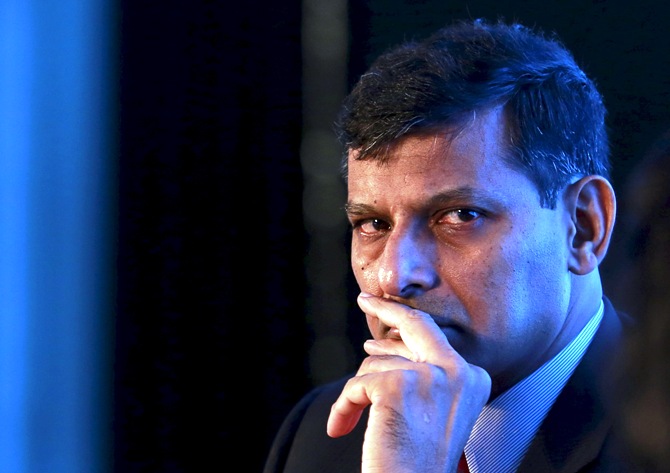
The policy will be presented in the backdrop of rising inflation.
It was the RBI which destroyed our $-job economy. It is for the RBI to resurrect it by instituting news ways of managing the INR, says Sonali Ranade

'People know if inflation is not within the tolerance band, then action will be taken so they do not expect inflation to rise above that.'

Here's what could be ahead for India: A $10-trillion economy by 2030-32, a Sensex at 1,00,000 by 2025, monthly GST revenues at Rs 2 trillion by 2024-25, 100 new unicorns by 2025, and poverty below 5 per cent by 2030, predicts R Jagannathan.

With the world's worst outbreak of COVID pandemic stalling a nascent economic recovery, the government has begun assessing the impact of the second wave of infections on different sectors and may look at providing support at an appropriate time to segments requiring fiscal help. Some of the economic indicators, including the Goods and Services Tax (GST) collections, still provide confidence and incoming data will throw some more light on the state of the economy, sources said. Services sectors like hospitality, tourism and aviation which had just started recovering were hit hard by the second wave of COVID, the sources said, adding these segments might need some support on an urgent basis from the government.
The Reserve Bank of India Governor Raghuram Rajan said bringing down inflation would help stabilise the rupee.

Indian economy is expected to grow by 10 per cent or more in the current fiscal, and 8 per cent plus in the next fiscal year, Niti Aayog Vice-Chairman Rajiv Kumar said on Tuesday. Addressing a book launch event, Kumar further said that seven years of the Modi government has laid a strong economic foundation for businesses to thrive in India. "There was a hiccup (in economic growth) for two years due to COVID-19 pandemic.

The Indian economy has recovered 'handsomely' from the pandemic-induced disruptions, former Niti Aayog vice chairman Arvind Panagariya said on Tuesday, while expressing hope that the recovery will be sustained and the growth rate of 7 to 8 per cent will be restored. Panagariya suggested that the government must now signal its intention to wind down fiscal deficit by cutting it by half-to-one percentage point in 2022-23. "The Indian economy has recovered handsomely, returning to its pre-COVID GDP... "Only private consumption is still below its pre-COVID-19 level," the eminent economist told PTI in an interview.

The Governor of the Reserve Bank of India may need all the suave charm of the fictional British spy to sell that same hard-nosed agenda to a powerful new prime minister.

India has a unique window of opportunity to effectuate long-lasting structural change in its banking sector, says Riju Agrawal.

Rajan said in order to export, one needs to be able to import things that go into those exports as cheaply as it can.
The Supreme Court on Friday dismissed a plea seeking stay on further sale of electoral bonds ahead of assembly elections.

First, the Insolvency and Bankruptcy Code, much-lauded as a game changer, needs serious reform. Second, some vital policy choices would need to be made as far as competition law is concerned., says Somasekhar Sundaresan.

The most common complaint of financial consumers is cumbersome processes, complicated products, usurious charges, and mis-selling of products, which finally don't deliver what is promised or as expect, notes Debashis Basu.

Reserve Bank of India Governor Shaktikanta Das tells Anup Roy, Raghu Mohan and Niraj Bhatt that it is time for banks to lower interest rates and start lending to cash-starved finance companies after due credit appraisal and proper risk assessment.

From the pandemic shocks to state polls to global trends, a raft of sentiment drivers are expected to steer the Indian stock market in 2022 after a historic year of massive investor returns and milestones. The Union Budget, which will be closely watched for further reform moves, and quarterly earnings of corporates will be among the developments on investors' radar amid global central banks moving towards tighter interest regime in the wake of inflationary pressures. The year 2021 was rewarding in a big way for equity investors.

The report expects the inflation framework, fiscal consolidation, infrastructure spending, FDI focus and strong external affairs policies to continue.

Of the Rs 20-lakh-crore package that Prime Minister Narendra Modi announced to defend the economy against coronavirus disruptions, fresh support may be only around 60 per cent of the offer as it counts the first financial stimulus and liquidity support that Reserve Bank has given already, and will overburden the bond market, says a report.
Finance Minister Arun Jaitley last month pointed to the high cost of capital for India's businesses as a key factor behind a manufacturing slowdown.

Two women candidates; Lok Sabha Speakers; Chief Justices; A Chief Election Commissioner; drafters of the Constitution; the RBI's first Indian governor; a farm leader who unsuccessfully contested four times; an iconic Bharata Natyam dancer...

'Indian macro conditions have never been better, and many businesses will safely compound earnings over the next five years.'

The decision to do away with Rs 500 and Rs 1,000 notes accelerated the slowdown in economic activity with growth averaging 6.8 per cent in the seven quarters after it, as against an average of 8 per cent in the six quarters preceding it, says former chief economic advisor Arvind Subramanian.
'The macro-economic stresses -- high interest rates, rupee depreciation and capital flows -- have receded now.' 'Interest rates have come down, inflation is down and the rupee has bounced back.' 'If oil prices continue at this level, there will be no vulnerability.' 'Growth is a different story.'

Rajan said that while there were talks about Jan Dhan, it was difficult to target transfers to people through this tool. Jan Dhan, he said, does not really work as advertised.

'It may sound like sacrilege, but does it really matter if the global raters downgrade India for fiscal slippage?' asks Tamal Bandyopadhyay.

The markets regulator made it easier for banks to acquire control in listed companies.

The government kept its nerve in the face of a massive shock. It chose not to resort to a massive fiscal stimulus. It focused instead on providing liquidity support and easing restrictions on movement in stages, observes T T Ram Mohan.

Finance Minister Nirmala Sitharaman is scheduled to meet heads of public sector banks (PSBs) next week to review performance of the lenders and progress made by them to support the economy battered by the COVID-19 pandemic. Banks would be urged to sanction loans for productive sectors to accelerate revival of the economy, sources said. According to sources, the two-day meeting would commence on November 17 and undertake a comprehensive review of various segments, progress in government schemes including Aatmanirbhar Bharat Abhiyan.

'A rag-tag coalition is more insecure and hence, more inclined to reform,' argues Devangshu Datta.

The better performing states throw up more employment opportunities including at unskilled levels.

At a pre-Budget meeting, the FM was asked to ensure that NBFCs come out of the liquidity crisis they are facing with the help of RBI. They also spoke about the futility of trying to achieve a 3 per cent fiscal deficit target over the medium term.

Banks feel happy shifting their toxic assets from loan books to investment books while the ARCs enjoy the management fees with a smile, observes Tamal Bandyopadhyay.

A record GST tax collection, an overhaul of the income tax return filing portal and the landmark move to scrap retrospective taxation have set the stage for the next level of reforms in tax administration that include bringing a framework for cryptocurrencies and rationalising the GST rate structure. With tax reforms such as faceless assessment taking roots, 2021 will go down as the year that pivoted the tax administration in a country aspiring to become the world's favourite investment destination. The task ahead is going to be a tough one as the tax department would grapple with taxing cryptocurrencies, rationalising Goods and Services Tax (GST) rates to shore up revenues and post June 2022, the scenario of how the GST revenue plays out for states without the Centre's support of compensation.

The draft regulations on compensation of private banks, based on sound risk management and productivity linked principles, comes within days of the US Congress passing a major financial reform bill to discipline firms on Wall Street.
Swiss banking professionals under the agies of the Swiss Bankers Association met the Reserve Bank of India officials on Wednesday to discuss areas of cooperation. They also apprised the Indian banking regulator about the steps that Swiss authorities had initiated to implement stringent anti-money laundering laws.
 © 2026 Rediff.com - Advertise with us - Disclaimer - Privacy Policy - Sitemap - Feedback - About us - Terms of use - Grievances